30 September 2026
Building a Comms Rack from Scratch
No two shows need the same comms, so no two of our racks are the same. This is how one comes together: from a conversation about who needs to talk to whom, through a drawing the client sees before anything is bolted in, to a case that arrives on site and works on one cable.
Every comms system that leaves our workshop is built for the show it is going to. Not adapted from a standard rack, not pulled off a shelf with a few changes: designed for that client, that venue and those dates, and drawn out before a single unit is bolted in. Here is how a rack goes from a conversation to a case on a truck.
It starts with who needs to talk to whom. Before we think about equipment we want to know the departments on the show, where each of them sits, which of them need to hear each other all the time and which only need to be reached now and then. A stage manager, a lighting desk, four camera operators and a security team have very different needs, and the system has to reflect that from the first key on the first panel. The venue matters as much: how big it is, what it is built from, how far the wireless has to reach and what else is transmitting there.
From that we choose the system. Sometimes it is a Riedel Artist matrix with SmartPanels at the fixed positions and Bolero beltpacks roaming; sometimes a Clear-Com or Green-GO system does the job better; often the two-way radios for the ground crew are tied in as well, so security has a clean channel of its own and the stage manager can still reach them. The choice is made for the show, not for our convenience.
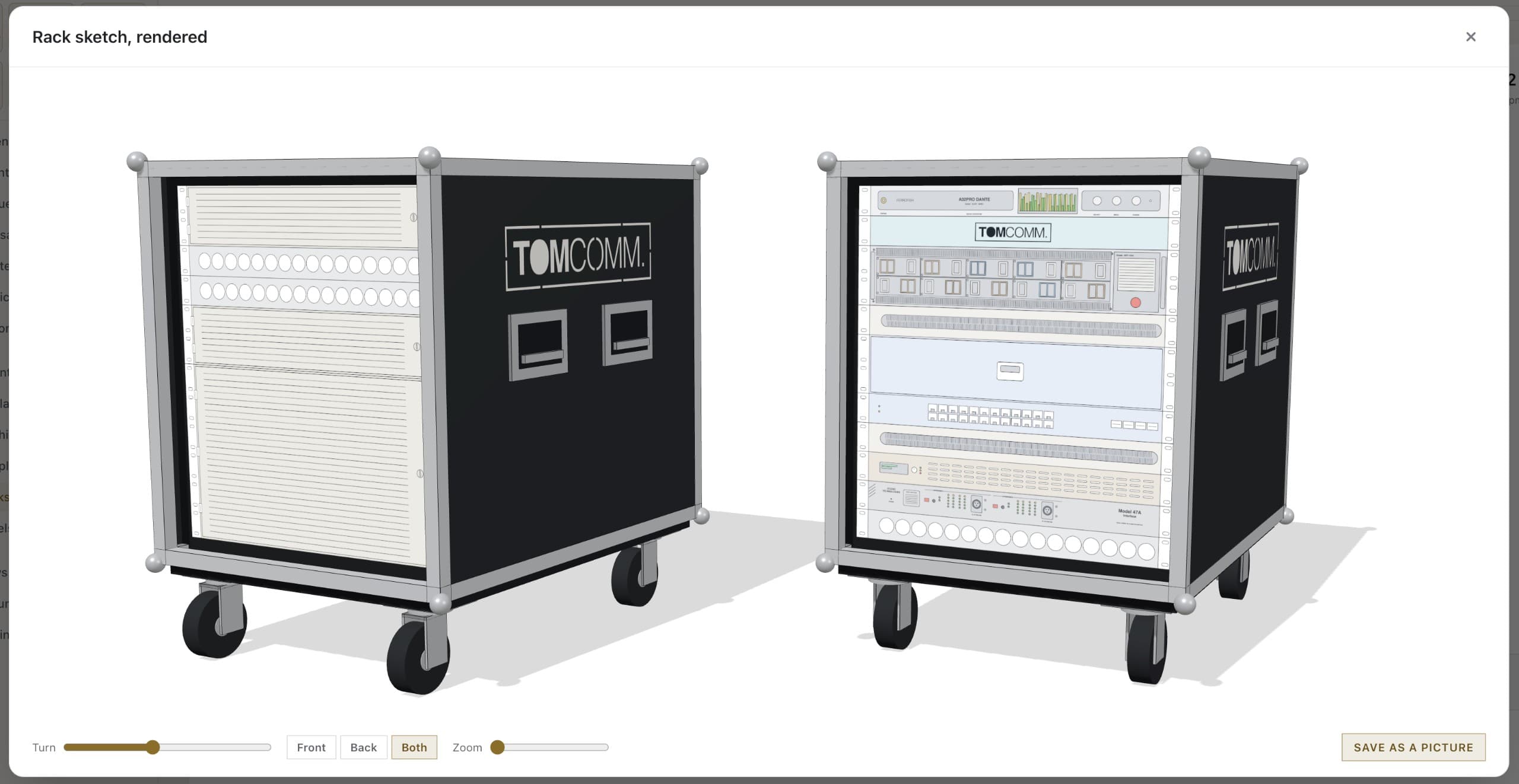
Then we draw the rack. Every rack we build is laid out in software first, unit by unit: the matrix frame, the network switch, the audio interfaces, the power distribution, the panels, the drawers for beltpacks and headsets, the vent panels and the blanks. The drawing puts power at the bottom where it belongs, keeps the things that get patched on the back within reach of the connector panel, and leaves the front for what the operator needs to see. It also adds up the weight, unit by unit, so that everyone who has to lift and carry the case knows what they are picking up before it arrives. The client sees that drawing before we build, and it is the same drawing that travels with the kit and stays in their job file afterwards.
The build follows the drawing. The connector panel on the back is made for the job, with exactly the Ethercon, XLR and power connections the show needs and nothing spare to confuse anyone. Inside, every cable is cut to length and labelled at both ends, so that a fault at two in the morning can be traced without a torch and a guess. Beltpacks, headsets and antennas go in drawers in the same rack, counted and labelled, so the system arrives as one thing rather than a pile of boxes.
Before it leaves, the whole system is powered up and run as it will be on site. Panels are programmed with the right keys and names, beltpacks are registered, channels are set, radios are programmed and channel-planned, and every connection on the panel is tested from the outside. Then it goes into its flight case with the drawing on the lid.
On site, that is what the bespoke work is for. The rack comes off the truck, the case opens, the antennas and panels run out to where the drawing says, and the system is ready in the time it takes to run the cables. There is no building on the day, because the building was done in the workshop, and no guessing, because every decision was made with the show in mind.
When the job is over the drawing stays with the client's file, and the next show starts the same way: with a conversation about who needs to talk to whom. If you have one coming up, tell us about it and we will draw you a rack.